
DJC#004 – Play, Rotate, Play, Repeat: The 4-Step Method to Parenting with Toys
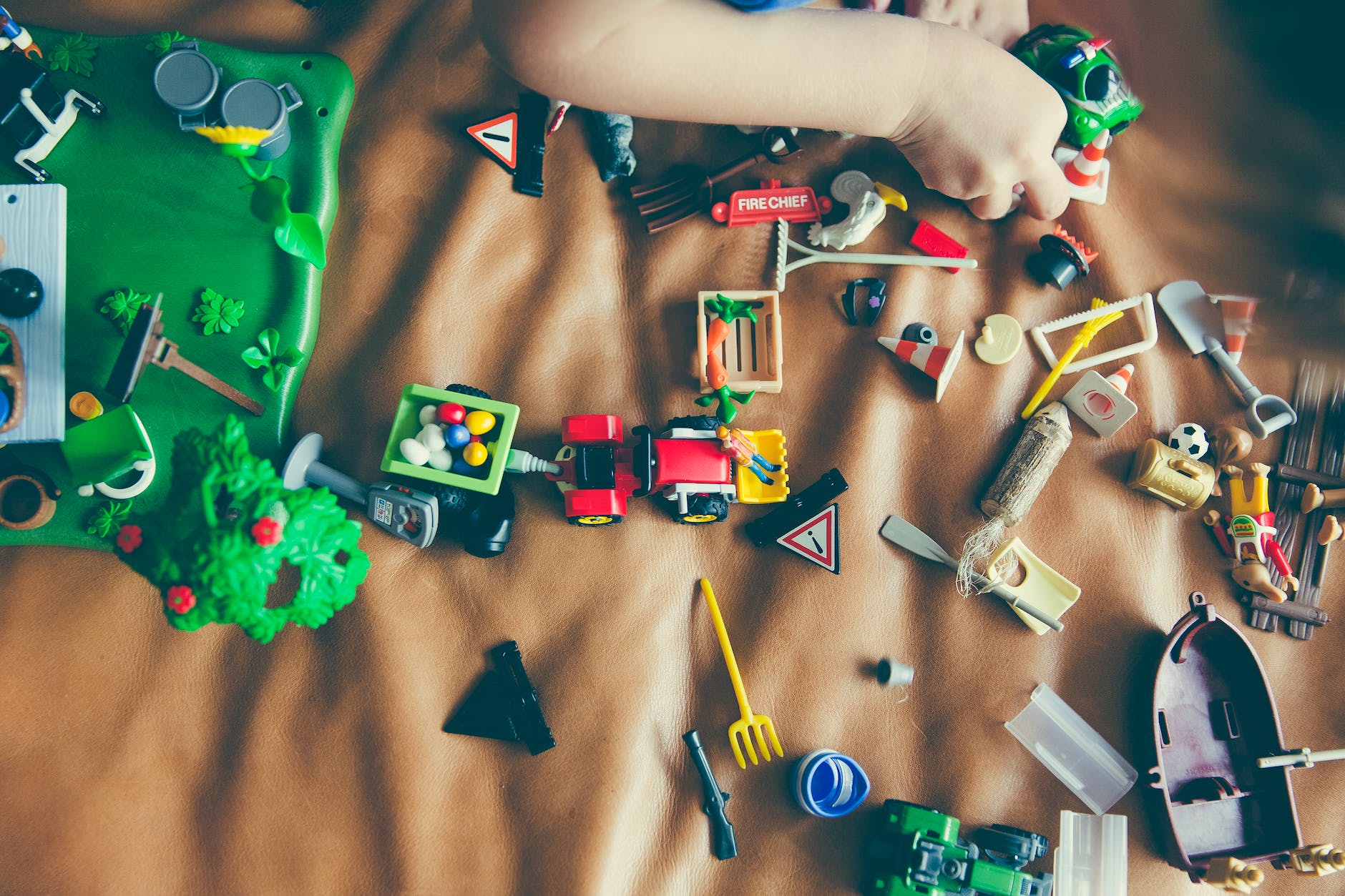
Toy, Toys, Toys
Every child should experience the joy of using their imagination to play carefree with toys. For most of us, this is a privilege that we take for granted. In our world of abundance, our children likely have more toys than we could ever imagine and that they could ever have enough time to really play with.
I don’t know about you, but after our son’s first Christmas and birthday, he had plenty. Obviously our children age, their interests change over time and they’re exposed to new characters and shows plus different levels of toys. Suddenly they forget all about the character that was so near and dear to their heart, and the only thing they can think about is the new shiny one. For our son, it was anything related to the movie Coco. He spent a good while all about Miguel and company and even had a Coco-themed second birthday party that included an Coco toy guitar solo.
Since we love our children, we want to give them everything they want by default. Deep down inside we know that’s not the really the best thing to be giving them whatever they want, but we can sometimes mistake giving them gifts for love. And then take that and multiply that by every family member or friend who’s a part of their life who also wants to give their share. In the end, there are toys all over the floor and we’re dodging sprained ankles left and right (let’s not even talk about when they get into LEGO!). And do they even play with all their toys?
Toy Solution
If you find yourself in this excessive toy problem, try the Play, Rotate, Play, Repeat Method. First things first, get their toys organized in bins or boxes if they’re already not. Next, go through their toys without them and set aside a group of 25-50%. Make sure to keep toys that are the same characters or categories together or else they won’t really notice a difference if Michelangelo is missing but they can still play with Leonardo.
Now take that bin or bins of toys and hide it away like it’s candy. Find a closet, shelf in the garage, shed, or anywhere else they’ll never be able to see and stash it away. Then wait for 2-3 months and take those bins back out and say, “Hey look what I found. Want to play with these?” Or just slyly integrate them back in with the rest of their toys.
When you reintroduce their toys, it’s a reaction that’s almost the same as when they first saw those toys, but more of an excitement – like when you run into an old friend on the street that you haven’t seen in forever. Trust me, they’ll be excited to play with their old friends!
On Repeat
The last step is to repeat the process. When you reintroduce their toys, simultaneously pack up another bin or two and stash those away. Keep repeating this process every 2-3 months, or as you see it work best with your child(ren).
Much of the emotion a child feels when they are given or buy a new toy is the excitement of having something new. This is really no different than the emotions we feel as adults. But think about how quickly those feelings fade away. How many new toys has your child received or bought and within a month (or less sometimes) they have completely stopped playing with that toy. It’s a waste of money and just a pure waste in general.
One last thing to think about. While toys are a part of childhood, not all kids love to play with toys . Maybe they like to draw, play an instrument or sport, or other activities. If they don’t like them, don’t keep buying them and let others know so they don’t continue to gift them toys (plus there is a much better gift that can be given which I’ll discuss in a future post).
So for now, find some old bins or boxes and send some of those toys on vacation. When they return from their trip to Box & Bin Island and are no finally longer being played with, then you know those toys’ time has come. It’s their time to move on and be donated to another child, so that other child can experience that same joy your child once did.
 Dad Journal Club
Leave a comment